




If you’re a fan of Great Danes, you might be wondering if they’re a good candidate for service dog work. After all, Great Danes are gentle giants, so they may seem like a great fit right out of the gate. While this may be the case for some, that doesn’t mean this dog breed is right for you.
What’s more, you need to determine if you have enough space to support them and a disability that would benefit from Great Dane assistance.
We’ll cover the role of a service dog below and break down the pros and cons of Great Dane service dogs.
What Are Service Dogs?
If you’re interested in a service dog, the first thing you need to do is understand what a service dog is. In short, a service dog is a special dog that’s trained to help you with a disability related task. Service dog tasks are the trained behaviors and service dog is taught to help someone with a disability. For example, a guide dog may guide someone who’s blind, or a service dog may alert someone who’s deaf to a fire alarm they wouldn’t hear otherwise.
Unlike your average canine companion, service dogs have legal protections in place. Following the civil rights era, several federal laws were passed to protect the rights of people with disabilities. These laws were meant to help people with disabilities access general public spaces, workplaces, and live without relying on other people to help them for basic daily living activities. For many, in order to live independently, they receive assistance from service dogs. These dogs are widely considered to be a medical necessity, as important as a medication or a cane, and therefore are legally categorized as medical equipment.
A great example of this is the Americans with Disabilities Act (ADA). The ADA grants service dogs the ability to accompany people who have disabilities in public. However, they need to be trained and well-behaved to experience these benefits as service dogs who are a threat to others or destroy property can be asked to leave and you would be liable for any damages.
Aside from public access, service dogs are also protected in your home. Let’s say you rent from someone who doesn’t allow pets in their building; a service dog is allowed to live with you due to protections from the Fair Housing Act (FHA).
You’ll find that service dogs also have protection under the Air Carrier Access Act (ACAA). The ACAA allows service dogs to accompany you on airlines and in airports with limited restriction and without fees.
What Disabilities Qualify for a Service Dog?
There are many disabilities that qualify for service dogs. In order to assert your legal rights to have a service dog, you’ll often need a letter from a licensed medical professional in your state who has assessed you and confirmed in writing that you require a service dog.You’ll also find that service dogs can qualify for physical and mental health disabilities, so even chronic mental health disorders, like depression, may qualify for a psychiatric service dog (PSD).
That said, it helps to know which disabilities qualify for a service dog, and some great examples include:
- Blindness
- Deafness
- Depression
- Anxiety
- Epilepsy
- Physical disabilities
- Some heart conditions, like POTS
- Chronic fatigue
- ALS
Of course, this list is not exhaustive, so it’s important to consult with a professional to determine if you qualify for a service dog.
Can a Great Dane Be a Service Dog?
Yes, Great Danes can become service dogs. In fact, Great Danes are known for being great service dogs, especially if someone needs assistance with physical tasks. This is due to their trainability, large build, and how simple caring for them can be.
Of course, a Great Dane service dog is only a good fit under specific circumstances. For these reasons, you need to focus on your needs and whether or not a Great Dane service dog can help you.
Why a Great Dane Service Dog Is a Good Choice
If you’re curious about getting a Great Dane service dog, you probably want to know why they’re a good choice. Thankfully, there are three key characteristics of this breed that make them a great choice. We cover them in detail below.
The Large Size of a Great Dane
The biggest benefit that you get with a Great Dane service dog is their size. Their large size allows them to help people who have physical disabilities. In fact, they’re large enough to open doors and strong enough to push wheelchairs, especially if they get stuck.
It’s also important to note that mobility assisting service dogs need to be able to handle at least 65% of their handler’s weight. This makes them a great choice for heavier people who have physical disabilities.
Relatively Low Maintenance
Compared to a lot of dog breeds, you won’t have to worry about Great Dane service dogs needing extensive grooming. Since they’re short-haired dogs, you don’t have to brush them frequently, and they do not require frequent bathing if they are accompanying you indoors.
While Great Danes may be big, you’ll find that they don’t need a ton of playtime or exercise. In fact, they’re low-energy dogs, so they won’t be nudging you to go on a long hike any time soon.
Simple to Care for and Easy to Train
One of the Great Dane service dog’s best traits is that they are simple to care for and easy to train. In fact, they’re sort of like gentle giants. They don’t exhibit stubbornness or aggression like other larger breeds, making them the top choice for those looking for a large service dog breed.
How a Great Dane Service Dog Can Help
Now, if you have a physical or mental disability, you may be curious about how a Great Dane service dog can help you. The good news is that there are lots of ways that these dogs can help you. We cover a handful of ways that service dogs can help with below.
Helping with Mental Health Disorders
Great Dane service dogs work well for mental health disabilities. They can provide deep pressure therapy for someone who is having a panic attack, and even prevent someone from harming themselves during a seizure.
Due to the large size of a Great Dane, you’ll find that they’re big enough to create a barrier between their handler and whatever object they have been trained to intervene for. This can help a service dog get between someone and a crowd, especially during a mental health episode. Great Danes can also recognize triggers and help people who struggle with mental health disorders avoid them.
Physical Assistance
First and foremost, you’ll find that the Great Dane is a large dog that can physically assist people who have disabilities. If someone is in a wheelchair, for example, you’ll find that a Great Dane service dog can pull that wheelchair. It should be noted that Great Danes suffer from having large hearts and often have to retire from providing mobility assistance earlier than other breeds to protect their health.
But the Great Dane service dogs can still provide non-mobility related tasks such as opening most doors, fetching items from high places, and nudging people when they need to move. Ultimately, Great Dane service dogs can still help with most physical tasks as they age.
Providing Comfort for Their Handler
Last but not least, a Great Dane service dog can provide comfort for their handlers. They can leverage deep pressure therapy (DPT), which involves putting a paw or their body on someone to calm them down.
Great Dane service dogs can also help by simply being there. People who struggle with chronic loneliness or depression can benefit from having a service dog around.
How to Get a Great Dane Service Dog
If you like what you’ve read so far, you’re probably ready to get yourself a Great Dane service dog. The good news is that the process is simple. It all starts with finding a Great Dane. You can buy one from a service dog trainer, which may run you $15,000 to $30,000, or you can buy/adopt one yourself. However, you’ll have to train them yourself.
Once you find a Great Dane, you’ll need to buy them or go through the adoption process, which varies based on the organization. We recommend starting with a puppy, and once they get comfortable in your home, you can start training them. Prior to bringing the dog home, connect with a medical professional to determine if you’ll qualify for a service dog. If you do not have a letter from your doctor, you could run into issues with your landlord or HOA if you are not allowed to have large dogs.
Then, you can train them, and once they’re well-behaved and can help you with your needs, you’re all set with your Great Dane service dog. That said, this is more of a summary than anything, so we recommend reading our full guide on the topic to learn more.
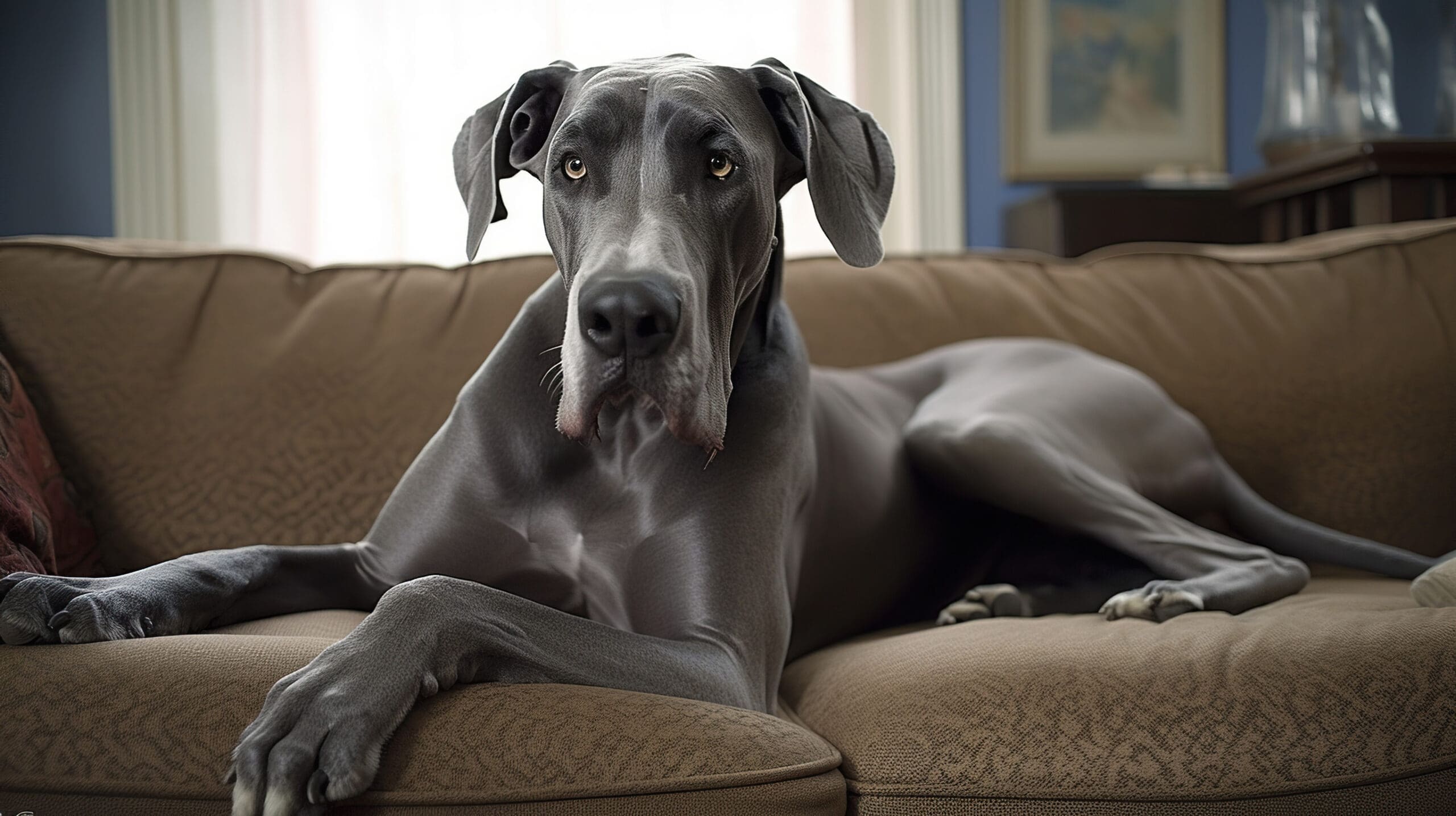
Our Final Thoughts on a Great Dane Service Dog
At the end of the day, whether or not you need a Great Dane service dog comes down to your individual situation. Speak with a licensed medical professional for more assistance determining if a Great Dane service dog is the right fit for you.
That said, if you have a physical or mental disability, there’s a good chance that you’ll qualify for a service dog, and there are plenty of Great Dane options available for you to choose from. Overall, Great Dane service dogs tend to work best for people who have physical disabilities.