




Flying with a cat sounds like a logistical headache until you break it down. Once you understand how airlines operate, what TSA expects, and how cats usually respond to travel, the whole thing becomes far more manageable. There’s a structure to it, and once you realize it, everything starts to make sense.
Most people stress about the flight itself. In reality, the experience is shaped long before you board. The preparation, the carrier, and how familiar your cat is with the process matter far more than the few hours you’ll spend in the air. Get those right, and the rest tends to fall into place.
Is Flying With a Cat Safe?
For most healthy cats, flying in the cabin is safe. That’s where your cat stays with you, tucked under the seat in an approved carrier, away from the noise and unpredictability of cargo handling.
Cargo travel is technically an option, but it’s rarely the right one for cats unless there’s no alternative. It just adds layers of stress you don’t need, mostly because of temperature fluctuations, handling delays, and separation from the owner.
That said, not every cat is a good candidate for flying. If your cat struggles with short car rides, panics in new environments, or has underlying health issues, a flight will amplify those problems. In those cases, driving or postponing travel might be the smarter move.
Airline Rules for Flying With a Cat in the US
Airline policies feel strict at first, but they’re predictable. Once you understand the basics, you can apply them almost anywhere.
The US Department of Transportation confirms that the setup is almost identical across major American airlines. You’re allowed to bring one cat in the cabin as a carry-on pet, and that cat must remain inside an airline-approved carrier for the entire duration of the flight. You’re paying for that privilege, usually somewhere between $99 and $150 each way.
Also, keep in mind that there’s a cap on how many pets are allowed per flight, which is why booking early actually matters. If the quota fills up, your cat isn’t getting on that plane.
The carrier itself is where most people get tripped up. It needs to be soft-sided, well-ventilated, and small enough to fit under the seat in front of you. The rough guideline most airlines follow is around 18 x 11 x 11 inches, with a total weight limit of about 20 pounds including the cat.
No one is measuring down to the millimeter, but if your carrier looks oversized, you’re giving staff a reason to stop you. It’s better to stay comfortably within limits than try to push them. If you want a breakdown of how specific airlines handle this, we recommend kicking off your research with our in-depth guide on American Airlines pet policy for a clearer understanding.
Documents, TSA, and What Actually Happens at the Airport
This is the part people overthink the most, mostly because they don’t know what to expect. In reality, it’s a fixed routine.
Before you even get to the airport, you’ll need a health certificate from a licensed vet, usually issued within 5 to 10 days of your flight. This confirms your cat is fit to travel. You’ll also want proof of rabies vaccination, and while a microchip isn’t always required, it’s one of those things you’ll be glad you have if anything goes sideways.
Once you’re at the airport, the TSA process is the only moment where things feel slightly chaotic, but even that follows a script. You take your cat out of the carrier, send the empty carrier through the X-ray machine, and carry your cat through the metal detector yourself. That’s it. You do not need to deal with any further hidden steps or random surprises.
Where people get into trouble is underestimating how their cat will react in that moment. You’re in a noisy environment, holding an animal that may already be stressed. If your cat is even slightly unpredictable, ask for a private screening room. TSA offers it at no extra cost, giving you a closed space where there’s no risk of your cat slipping away in the middle of security.
How to Prepare for Flying With a Cat
Preparation is where everything gets decided. You either set your cat up for a manageable experience, or you gamble and hope for the best.
Carrier Training (Start Early)
Start at least two weeks before your flight. Leave the carrier open at home and make it part of your cat’s environment. Add a blanket, treats, or toys. Let your cat explore it freely. The goal is simple: the carrier should feel familiar, not threatening.
Harness Training
You will be holding your cat at the TSA. That means you need control. We recommend using a properly fitted harness and leash, and getting your cat used to wearing it before travel day. Expect resistance at first. So, stay consistent.
Flight Planning Strategy
Your flight choice affects your experience more than you think. Early morning flights tend to be calmer, with fewer delays and less activity in the airport. A quieter environment can make a noticeable difference in how your cat responds to the experience.
It’s also worth calling the airline a day or two before departure. Policies don’t change every week, but small details do shift, and confirming everything ahead of time avoids last-minute friction.
What the Flight Feels Like (For You and Your Cat)
Once you’re on the plane, the experience becomes surprisingly uneventful. Your cat goes under the seat, inside the carrier, and stays there. There’s no taking them out mid-flight, no repositioning them on your lap, no “just for a minute” exceptions. Airlines are strict about this, and for good reason.
Most cats react in one of two ways. Some stay quiet and observe. Others complain for a while, usually during takeoff or when the environment changes, and then settle down once things stabilize. Neither reaction is unusual.
What helps more than anything is familiarity. A blanket that smells like home, a piece of your clothing, or even just your presence nearby can reduce how overwhelming the experience feels for your cat. Covering part of the carrier can also help limit visual stimulation, which tends to calm them down.
The only aspect where most people usually go wrong is sedation. It sounds like a good idea, but unless your vet specifically recommends it, it can cause more harm than good. Changes in air pressure and altitude can affect how sedatives work, and the last thing you want is unpredictable behavior mid-flight.
Flying With a Cat as an Emotional Support Animal
There’s a lot of outdated information floating around here, so let’s keep it simple. Emotional support animals (ESAs), including cats, no longer get automatic access to flights or fee waivers in most cases. Airlines have tightened their policies, and your cat will almost always be treated as a standard pet when it comes to flying.
That doesn’t make ESA status useless. It still plays a significant role in housing and mental health support. If you’re navigating that side of things, we suggest that you spend some time understanding current emotional support animal laws.
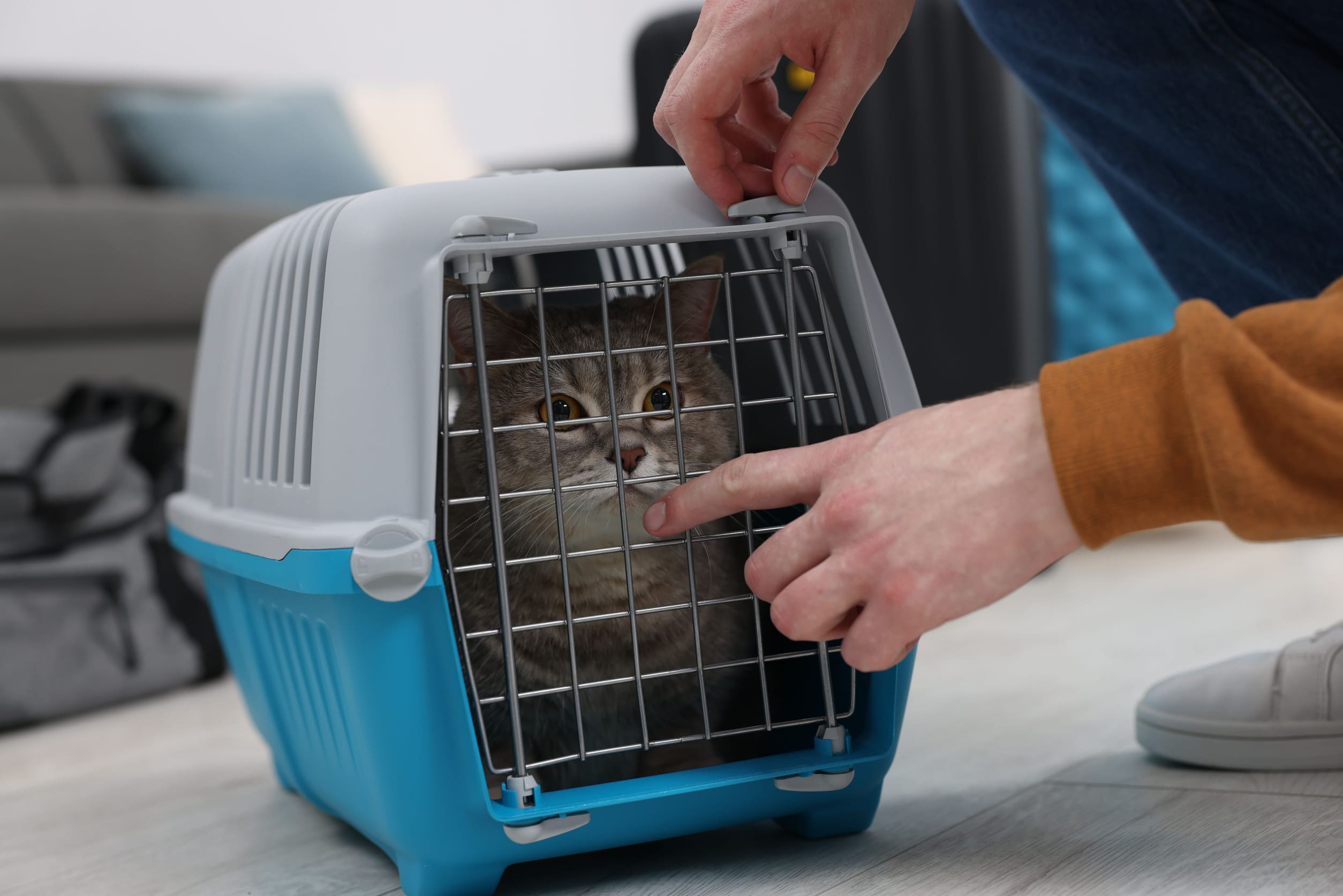
Flying With a Cat Is Easier Than You Think
Flying with a cat becomes much easier once you understand how each part fits together. The airline requirements, the airport process, and your cat’s behavior all follow patterns that you can prepare for ahead of time.
A well-fitted carrier, a bit of advance training, and a clear idea of what to expect at the airport go a long way. With those pieces in place, the experience tends to unfold exactly as expected, without unnecessary stress or surprises.