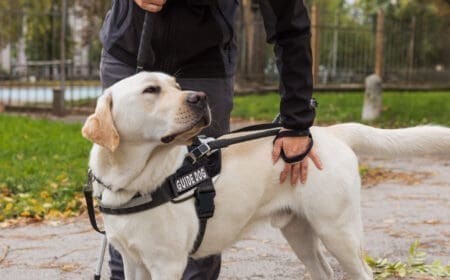



When you think about a service dog, what comes to mind? Probably a guide dog helping someone who’s blind navigate or a dog that pushes/pulls a wheelchair. Now, while these are definitely tasks that service dogs help with, did you know that service dogs can also help with epilepsy?
While medications can also help you manage the condition, you’ll find that a service dog offers some unique benefits. These benefits include coming to your aid during a seizure, recognizing when a seizure is going to happen, and even getting help for you in public or at home. For these reasons, if you or a loved one is struggling with epilepsy, it’s not a bad idea to consider a service dog.
That said, there’s a lot to learn about service dogs, epilepsy, and how a service dog can help with the condition. Fortunately, this guide covers everything you need to know. Read on to learn more about how a service dog for epilepsy can help.
What Is Epilepsy?
Epilepsy is a condition that impacts millions of people around the world, and it’s characterized by a tendency for someone to have seizures. More often than not, these chronic seizures may happen at random, or they may even be triggered by flashing lights or other types of stimulation. Essentially, epilepsy refers to a condition where someone is dealing with chronic seizures.
Depending on the person, the intensity of the condition will vary. Seizures may be mild and rare, or they may be dangerous and frequent. While medicine can help, service dogs for epilepsy are becoming a popular treatment modality to ensure that someone is safe in the event that a seizure occurs.
What Is a Service Dog for Epilepsy?
A service dog is a unique companion animal. Instead of being a pet, a service dog is a working dog that is trained to help people who are struggling with mental or physical disabilities. Typically, service dogs are trained to help with specific tasks that are unique to the individual, especially when it comes to a disability like epilepsy.
You’ll also find that service dogs don’t have to play by the rules that most animals play by. This is because they’re protected under the Americans with Disabilities Act (ADA). This enables service dogs for epilepsy to accompany you in public spaces; this applies to private businesses, government property, and just about anywhere else.
Aside from protections in public spaces, service dogs are also allowed to live with you in homes that aren’t usually pet-friendly. This is due to the Fair Housing Act (FHA), which prevents landlords from discriminating against people who have mental or physical disabilities. You’ll also find that service dogs can accompany you on airlines thanks to the Air Carrier Access Act (ACAA).
Due to these protections, it doesn’t matter if you have a risk of developing a seizure at home, in public, or on a plane, because your service dog can always be right by your side.
How a Service Dog for Epilepsy Can Help
How a service dog for epilepsy can help depends on the situation. In some cases, a service dog may find help during a seizure, but in others, service dogs may fetch medications or remind you to take medication. Ultimately, how a service dog helps with a condition like epilepsy depends on the specific case.
It’s for this reason that most service dogs for this condition are trained around the individual. In fact, this allows the dog to respond to chemical changes in the body that occur before a seizure, which can dramatically improve your quality of life.
Still, these aren’t the only ways that a service dog for epilepsy can help you. Discover some more common methods below.
Protecting Against Injury
Unfortunately, seizures have a tendency to result in injury, especially if someone is standing up before they happen. It’s for this reason that many service dogs for epilepsy are trained to prevent this from happening. A service dog for epilepsy can prevent injury by jumping in front of someone before they hit the floor or lying next to someone to prevent them from rolling or otherwise harming themselves.
Depending on the condition’s unique circumstances, a service dog for epilepsy can be used in other ways to prevent injuries.
Getting Help for Someone Having a Seizure
Due to the nature of epilepsy, seizures can happen frequently and seemingly at random. To ensure that someone is safe in public and at home, service dogs for epilepsy are trained to get help. Some dogs will be equipped with devices that can call emergency services, and most seizure dogs are trained to bark in public to attract help if someone goes down due to a seizure.
What’s more, service dogs for epilepsy can guide someone to a safe space before a seizure develops to ensure that they can make it through the seizure in a safe environment.
Improving Quality of Life
Unfortunately, a lot of people forget about the mental toll that epilepsy can have on someone. The good news is that a seizure dog can improve someone with epilepsy’s quality of life. This is because they can provide someone with the confidence they need to go outside, get a job, or even travel.
What’s more, service dogs for epilepsy can help people avoid triggers that cause seizures. For example, they can guide them away from flashing lights and other things that may overstimulate them and result in a seizure. Indirectly, this allows service dogs for epilepsy to treat mental health disorders, like depression and anxiety, that may come with epilepsy as a side effect.
How to Get a Service Dog for Epilepsy
If you want to get a service dog for epilepsy, there are a handful of steps that you need to follow. First and foremost, you need to get a dog or buy one from a service dog trainer. If you plan on buying one from a trainer, you’ll need to follow their steps. On the other hand, if you want to qualify and train a service dog yourself or work with a trainer after you have a dog, you can follow the steps below.
- Consult with a licensed medical professional to determine if you qualify for a service dog for epilepsy.
- Determine the type of dog you need, what training should look like, and any specific tasks you need assistance with.
- Adopt or purchase a dog that you can train.
- Bring your dog home and wait for them to get settled and used to you.
- Begin training your service dog.
Once your dog is trained to help you with your condition, you’re all set. While you can follow the steps we covered to start the process, we also have a more in-depth guide that will help you get a service dog for epilepsy.
How Much Is a Service Dog for Epilepsy?
When it comes to the cost of a service dog for epilepsy, it depends on several factors. First and foremost, you have to account for the cost of the dog. If you want to train one yourself, you’ll need a puppy; this can cost around $1,000 to $5,000, depending on the breed. However, if you’re fortunate enough to adopt one, you may be able to spend around $50 to $750.
Once you have a service dog, you need to train them. This is where service dog costs get complicated because the overall price is based on the type of training the dog needs. To better understand these costs, we recommend checking out our guide on service dog pricing. That said, if you self-train, the cost is around $5,000 to $10,000. On the other hand, professionals may charge $10,000 to $15,000.
It’s also important to note that you can buy a seizure dog from a reputable organization. This can cost around $20,000 to $30,000, but there may be grants and other programs that can help.
Service Dog for Epilepsy: Our Final Thoughts
Epilepsy is a dangerous condition that impacts millions of people across the United States, and while medication can help, service dogs can drastically improve your quality of life. They can get help in public, call for help in your home, and even prevent you from hurting yourself during a seizure.
For these reasons, it’s not a bad idea to consider a service dog for epilepsy if you or a loved one is struggling with the condition. That said, always consult with a licensed medical professional to determine if a service dog is right for you.