




Pitbulls have long been debated in public policy, housing, and animal control laws, but their reputation doesn’t reflect the full picture. Many pitbull-type dogs are stable, confident, people-oriented companions that can excel as service animals when carefully selected and responsibly trained.
However, because of ongoing breed-specific legislation (BSL) in parts of the United States, anyone considering a pitbull service dog needs a clear understanding of federal rights, local restrictions, and how to evaluate a safe, suitable candidate. This guide explains what you need to know, including legal protections, training standards, and breed-specific rules.
What Is a Pitbull Service Dog?
Based on the Americans with Disabilities Act (ADA)’s definition of a service animal, it’s clear that a pitbull service dog is a dog trained to perform tasks that directly support a person with a disability. The ADA does not restrict any dog breed from becoming a service dog. What matters is training, behavior, and the dog’s ability to perform disability-related tasks.
Check our deep dive on service dogs to understand what roles these highly-trained canines can tackle.
Common Misconceptions About Pitbulls as Service Dogs
Several myths make it harder to evaluate pitbulls fairly as service dogs.
- Pitbulls Are Banned as Service Dogs: The ADA does not restrict any breed; only behavior and task training matter.
- Pitbulls Are Too Aggressive for Public Work: Aggression is an individual behavior, not a breed trait, and many pitbulls are calm and trainable.
- Pitbulls Cannot Pass Public-Access Standards: With proper socialization and positive-reinforcement training, pitbulls can meet the same expectations as other breeds.
- Housing Providers Can Deny Pitbull Service Dogs Automatically: The FHA prevents landlords from rejecting a trained service dog solely because of the dog’s breed.
These clarifications help separate fact from assumption and can give you a more accurate view of what pitbull service dogs are capable of.
Why Pitbulls Can Excel as Service Dogs
Many well-socialized pitbulls demonstrate the traits needed for demanding service dog work, including:
- Strong focus on human handlers.
- High physical endurance.
- Good task engagement.
- Steady pressure application for grounding tasks.
- Reliable retrieving ability.
These inherent traits can support a wide range of service tasks, especially when the dog has been evaluated for a suitable temperament. For more reasons, check this guide on why a pitbull can be a service dog.
When a Pitbull May Not Be a Good Fit
Not every dog is suited for service work, regardless of breed. Potential challenges include:
- Strong reactivity toward animals or people.
- Limited social history or traumatic experiences.
- Difficulty working in noisy or crowded areas.
- Low resilience in unpredictable settings.
Reviewing these points helps handlers determine whether their individual pitbull is prepared for task work.
Breed-Specific Laws Affecting Pitbulls as Service Dogs
Across the United States, breed-specific legislation (BSL) varies by city and county. Several major jurisdictions have recently repealed pitbull bans, while others continue to enforce restrictions:
- Prince George’s County, Maryland ended its decades-long pitbull ban in 2025 and now uses behavior-based rules instead of breed-based criteria.
- Denver, Colorado repealed its pitbull ban in 2020 and now follows breed-neutral dangerous dog laws. Note that all pitbull-type dogs must undergo an in-person assessment by the Denver Animal Protection (DAP) department.
- Miami-Dade County, Florida phased out its long-standing pitbull ban in 2023, shifting toward behavior-focused regulations.
- Springfield, Missouri repealed its pitbull ban in 2022 after a public vote.
- New York City Housing (NYCHA) still prohibits pitbulls in public housing, even though the city itself does not ban the breed in public spaces.
- States with fully breed-neutral laws, including Alaska, Arizona, Connecticut, Massachusetts, Texas, and Virginia, don’t have any form of breed-specific restrictions.
These examples highlight how local laws differ widely, so handlers should review the rules in their specific city or county before selecting a pitbull as a service dog. Keeping these variations in mind helps avoid complications with ownership, housing, and travel.
Legal Rights of Pitbull Service Dogs in the U.S.
Understanding federal service dog protections is essential for anyone considering a pitbull service dog, especially because federal access rights differ from local ownership rules. The following laws determine where service dogs are allowed and what documentation may be required.
ADA Public Access Protections
Under the Americans with Disabilities Act, trained service dogs may accompany their handlers in public businesses, government buildings, transportation, and other public-facing environments. Staff are legally limited to two questions:
- Is the dog required because of a disability?
- What task has the dog been trained to perform?
These standards apply to all breeds and focus on the dog’s training and behavior. Keeping these guidelines in mind helps set clear expectations for public interactions.
Fair Housing Act (FHA)
The Fair Housing Act protects people who rely on service dogs or emotional support animals. Housing providers cannot deny a pitbull service dog based only on breed, though documentation confirming disability-related need may be required.
If you want clarity on ESA housing rules, check our page on emotional support animal laws. Understanding the FHA supports smoother communication with landlords and housing authorities.
Air Carrier Access Act (ACAA)
Under the ACAA, airlines must accept trained service dogs regardless of breed. They may only deny access due to unsafe behavior or incomplete paperwork. Required documents often include:
- DOT service animal forms.
- Health attestation forms.
- Confirmation of training and expected behavior.
Gathering these documents in advance helps reduce stress and improve the overall travel process.
Local Rules vs. Federal Rights
Federal laws determine public access, but local governments may still regulate pitbull ownership through licensing, registration, or insurance requirements. This means a pitbull service dog can have full ADA access rights while still needing to meet local ownership rules.
Keeping both federal protections and local regulations in mind makes it easier to plan for housing, travel, or relocation.
How to Get a Pitbull Service Dog
There are two straightforward ways to get a pitbull service dog. Both approaches can work well, but they require different levels of time, cost, and involvement.
Option 1: Receiving a Pre-Trained Service Dog
Some organizations match handlers with professionally trained service dogs. To qualify, the handler must have:
- A confirmed disability diagnosis.
- Documentation from a licensed healthcare professional.
- A clear need for task-trained support.
Once approved, the organization provides a dog that has already completed public-access training and task work. This is typically the most time-efficient route, though availability and cost can vary. Considering this option is useful for handlers who need immediate support or who prefer professional training from the start.
Option 2: Adopting or Purchasing a Dog and Training It
You can also adopt or buy a dog and raise the dog through the full training process yourself. This requires:
- Careful temperament evaluation.
- Basic and advanced obedience.
- Public-access skills.
- Task training tailored to the handler’s disability.
The ADA does not require formal certification, but structured training remains essential. Many handlers use professional training programs or online courses to ensure their dog meets public-access standards. For people starting from scratch, registering for a structured program can help keep progress consistent and verifiable.
If you choose to train your own dog, registering with Emotional Support Animal can simplify the process. We refund 100 percent of the program price if your dog completes our training program and is later denied public access due to training issues.
Ultimately, deciding how to get a pitbull service dog depends on your timeline, your experience level, and the dog you select. Whether you work with a trained service dog organization or train your own dog through a structured program, the focus should remain on stable temperament, consistent behavior, and reliable task performance.
Practical Advice for Pitbull Service Dog Owners
Pitbull service dog handlers may face more questions or skepticism than those working with other breeds, so preparation can make daily access easier.
- Handle Public Skepticism Calmly: Give short, factual answers, maintain consistent cues, and practice in busy environments to reinforce steady behavior.
- Use Training Resources Wisely: Positive-reinforcement programs help keep skills sharp. The ADA does not require certification; only trained tasks and reliable behavior matter.
- Know Where to Find Legal Support: Disability rights groups, ADA coordinators, and Fair Housing Assistance Programs can help resolve access or housing issues.
- Maintain Clear Gear and Identification: While not required, a labeled harness or vest can reduce unwanted questions and help the public understand the dog’s role.
- Document Training Progress: Keeping simple training logs or notes can be useful if questions arise during housing or travel discussions.
- Prioritize Routine Socialization: Regular exposure to crowds, transportation, and varied settings strengthens confidence and consistency.
With these strategies in mind, you can manage public interactions, training expectations, and legal questions with greater clarity and confidence.
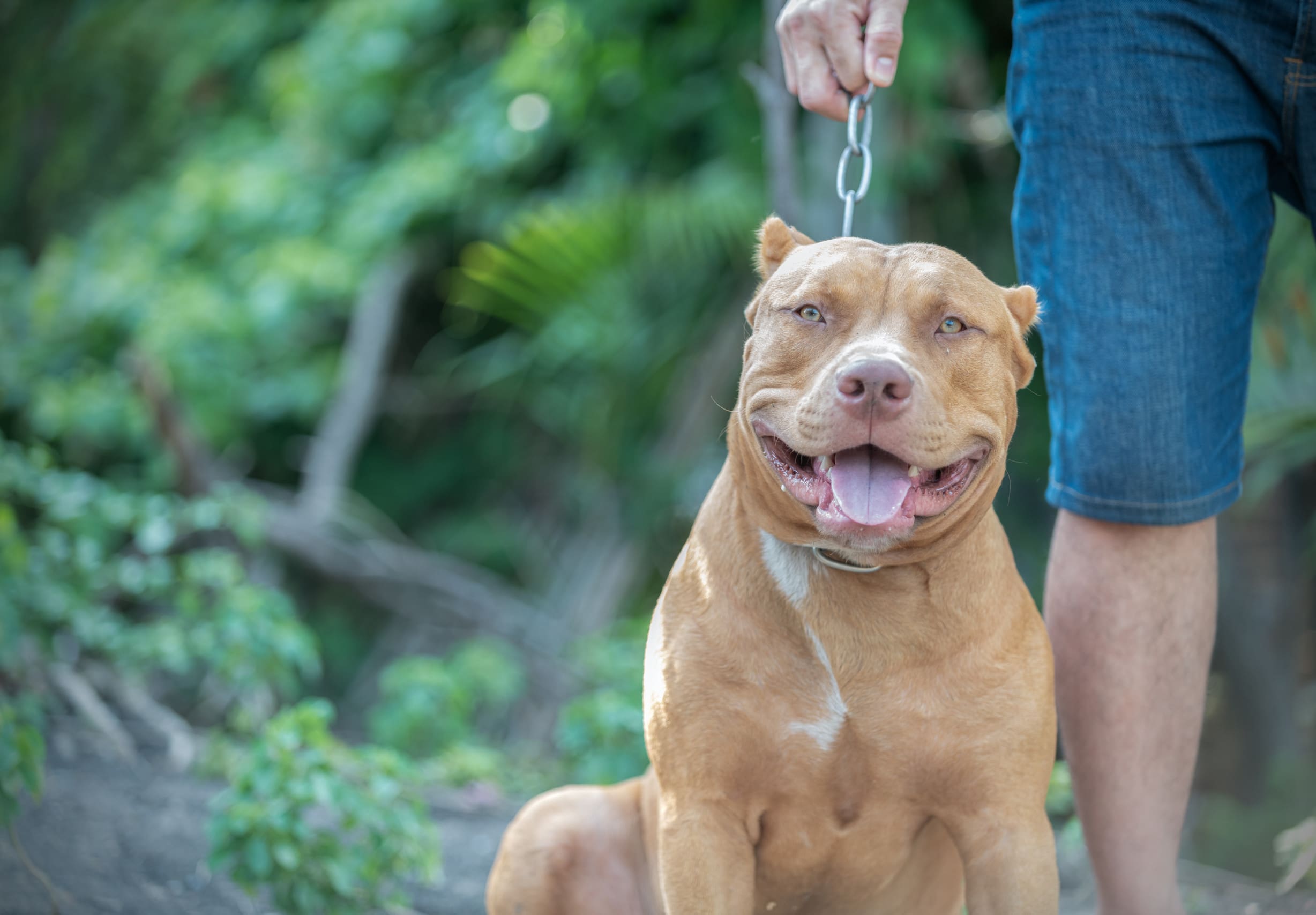
Choose the Right Pitbull Service Dog for You
Selecting a pitbull service dog comes down to temperament, training consistency, and your specific support needs. Some pitbulls are well-suited for task work, while others may be better companions than working dogs.
Focusing on stable behavior, positive-reinforcement training, and local breed regulations helps you make an informed decision. With the right preparation, a properly trained pitbull can provide dependable assistance and long-term support.