


Service dogs are remarkable animals that can perform a variety of commands to benefit their handlers in day-to-day situations. Considering everything these dogs can do for their handlers, which we will cover below, there’s no doubt that service dogs are among the most intelligent, and one breed that often comes to mind when thinking about intelligent breeds is the border collie.
However, it isn’t only the border collie’s intelligence that makes this breed a perfect service dog. It is also the breed’s strong work ethic, loyalty, physical abilities, and reliability to stay on the job without ever abandoning the handler to chase after a squirrel or anything else that gets their attention. If you’re considering a border collie service dog or are simply curious about this breed as a service dog, our article will cover everything you need to know.
Read on to learn more about service dogs, some of the most common border collie service dog tasks, service animal laws to note, and how you can get a border collie service dog.
Service Dog Requirements Under the ADA
Before covering border collie service dogs in detail, we first should take a look at the federal guidelines for what a service dog is in the first place.
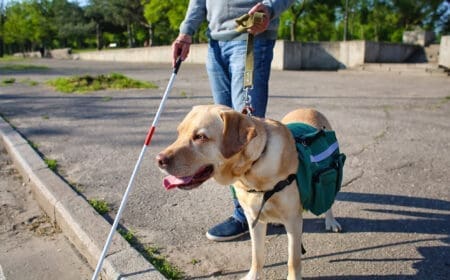
First and foremost, a border collie service dog must be trained for a disability related task. This can be performing tactile stimulation for someone struggling with dissociative episodes, retrieving objects from the ground for someone using a wheelchair, and guiding someone who’s visually impaired in public.
This is the only requirement for a border collie service dog to gain legal recognition. Unlike what many think, registration or certification isn’t required for a dog to be a service animal. Additionally, this training can be done by anyone as long as it leads to the dog achieving the end goal – executing a disability-related task. However, registering a service animal can be worth it and provide additional documentation.
However, a border collie service dog’s training involves more than disability-related tasks alone. They also must be well-behaved in public and stay on task to ensure they can carry out their duties in all public situations. This is a big part of service dog training programs, especially with hyper dog breeds like the border collie. These dogs undergo rigorous training to ensure they remain patient and reliable to assist their handlers in all situations, whether there are other animals, crowds of people, or strange sights and smells.
Identifying if a Dog Is a Service Dog
When training is done, service animals don’t require any certification or diploma to prove their training status. Under federal guidelines, businesses can ask the following two questions to determine whether a dog is a service animal:
- Is the dog a service animal required because of a disability?
- What work or task has the dog been trained to perform?
Other than asking these two questions, it is illegal for businesses to ask for any documentation or require the dog to perform tasks. However, if a service dog is aggressive or isn’t under control, and the handler can’t get the dog under control, businesses may deny the service animal. If this happens, the business must allow the individual with a disability but without the animal; it can’t lead to denying the handler services or goods.
Can You Train Your Own Border Collie Service Dog?
Yes, you can train your border collie to be your service dog. The federal law clearly allows this and doesn’t require service dogs to be trained by a professional dog trainer. Anyone who has the ability can train their own service dogs. A border collie service dog trained by the owner is just as valid as one trained by a professional.
Common Border Collie Service Dog Tasks
Now that you know the legal requirements for a border collie service dog, here are the common tasks these dogs are trained to help their handlers. Since they perform a wide range of tasks, we will break these down into different disability categories. Knowing what tasks border collies excel at when it comes to service dog work will help you determine whether or not this breed is the right choice for you or your loved one with a disability.
Physical Disabilities
The size of the border collie makes them ideal for a variety of service dog tasks for people with physical disabilities, including:
- Retrieving Objects: Border collies can retrieve dropped items, fetch specific objects, including medication, and carry small items.
- Counterbalance: With their sheepherding background, border collies excel at providing light balance to handlers, especially when navigating stairs or curbs. However, note that border collie service dogs aren’t suitable for full bracing (breeds like Labs are better suited), where the handler can rely on complete support.
- Daily Tasks: Border collie service dogs can help with daily tasks like switching lights on and off, opening and closing cabinets, and putting on or taking off clothes.
Psychiatric Disabilities
With their high trainability, intelligence, and emotional awareness, border collies make some of the best psychiatric service dogs. A border collie psychiatric service dog can perform:
- Deep Pressure Therapy: This is one of the most common psychiatric service dog tasks that border collies excel at by lying down across the handler’s lap or legs to ground them during an episode.
- Interrupt Self-Harm: Border collie service dogs can be trained to pick up signs of self-harm behaviors like scratching and picking, and interrupt the handler by nudging, pawing, and other means.
- Wake Up the Handler: A common task for PTSD service dogs, border collies can be trained to identify night terrors and nightmares and wake the handler.
Sensory Disabilities
Border collies are among the most preferred service dog breeds for sensory disabilities. These dogs can assist their handlers by:
- Alerting to Specific Sounds: Border collie hearing dogs can pick up specific sounds with their sharp senses and alert the owner to doorbell/knocking, phone ringing, alarms, baby crying, a name being called, smoke alarms, and much more.
- Guiding the Handler: Border collies are excellent guide dogs for people with partial or temporary vision impairments (larger dogs are better for people with permanent visual impairment). They can help navigate obstacles, stop at curbs, lead around hazards, and help the handler pass through crowded spaces.
- Creating Space: For people with sensory processing disorder, border collies can create space in crowded areas and prevent others from getting too close in a non-aggressive, controlled way to prevent the handler from going into an episode.
Intellectual Disabilities
The trainability of the border collie makes them a perfect service dog candidate for intellectual disabilities, since these disabilities require some of the most intense training and physical abilities. Here’s what a border collie service dog can do for individuals with intellectual disabilities.
-
- Prevent Wandering: A common task performed by autism assistance dogs for kids, border collies can prevent the handler from wandering away and contain them in a safe area.
- Bring Help: In an emergency, a border collie service dog can alert passersby and bring help, a critical task that can be lifesaving.
- Help With Routines: A border collie service dog can assist the handler with an intellectual disability by following schedules or bringing medication at set times.
Other Disabilities
In addition to the above, a border collie service dog can help with other disabilities by performing specific tasks. Here are some of the most notable ones.
- Activate Medical Alert: For people with epilepsy and diabetes, border collie service dogs can activate a medical alert button for the handler to receive help.
- Scent Detection: Border collies can detect low or high blood sugar through scent detection and alert the owner, though it is debated whether this actually works or not.
- Seizure Response: A border collie service dog can learn to pick up early signs of a seizure (like breathing and chemical changes in the body) and alert the owner before it happens.
Federal and State Laws to Note for a Border Collie Service Dog
The Americans with Disabilities Act (ADA) is a federal law that everyone interested in getting a border collie service dog should get themselves familiarized with. This law allows all service animals, regardless of the type, to accompany their handlers in public. With this, a trained border collie service dog can enter restaurants, cafes, government buildings, shops – pretty much anywhere the handler is allowed to enter.
States can also set their own service animal laws and grant additional protections. For example, the ADA doesn’t cover service animals in training, but the California Disabled Persons Act allows individuals to bring a service dog in training to any public place for the purpose of training the dog, just like fully trained service dogs.
The Fair Housing Act (FHA) also protects service animals when it comes to housing. A landlord cannot deny a border collie service dog because of no-pet policies. The same protection also applies to HOA decisions that restrict pets, including any breed or weight restriction.
Lastly, the Air Carrier Access Act allows service animals to fly with their owners in the passenger cabin free of charge without following pet travel rules. With this protection, a border collie service dog can fly in the passenger cabin on all commercial flights; airlines also can’t charge pet fees.
Given that border collies are medium-sized dogs that don’t meet the weight requirements of most airlines for flying in the passenger cabin, this ensures a border collie service dog can continue benefiting the handler on flights. However, you can’t just take a border collie service dog to your next flight unannounced. You must complete the relevant Department of Transportation form before flying with a service dog.
Start Training Your Border Collie Service Dog Today
If you have a border collie and are diagnosed with a disability, a border collie is a great choice for service dog work. You can either have a border collie service dog trained for you, or you can train your border collie service dog yourself, either on your own or together with a service dog trainer.