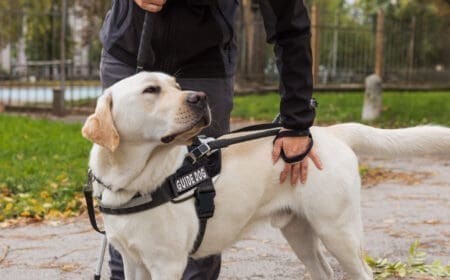




Service animals are some of the best companion animals that you can have. They can help you with physical tasks, assist you with your emotions, and even find help and support when you need it the most. Ultimately, service dogs improve the quality of life of millions of people around the world, so it’s natural to wonder if a service dog can help you too.
Now, if you have a pet already, you might be wondering if you can make them a service animal. The short answer is that you can, but there’s a lot more to it than that. Read this guide to learn more about how to make your pet a service animal.
Understanding Service Animals
Before we dive into making your pet into a service animal, it’s important to know and understand what they are. According to the Americans with Disabilities Act (ADA), service animals are dogs who are trained to help someone with a specific task. This task must be directly related to their disability, or they must otherwise improve their quality of life.
Unlike your average canine companion, service dogs have some unique benefits. For example, they can come with you in restaurants, shops, hospitals, retail stores, and most other public spaces. In fact, the Air Carrier Access Act (ACAA) allows service dogs to come with you on commercial airlines and through airports.
However, this may only apply to the United States, so you’ll need to check with the laws of other countries before you can bring a service dog with you on a plane outside the country.
What Disabilities Qualify for Service Animals?
Before you determine if you can make your pet a service animal, it helps to know which disabilities qualify for a service animal. While everyone’s situation is unique, there are some common disabilities that qualify for a service animal, and we list them below.
- Depression
- Anxiety
- Blindness
- Deafness
- Amputations
- Epilepsy
- Autism
- Down syndrome
These are only a few examples, and whether or not you qualify depends on your specific situation.
You can learn more about disabilities that qualify for a service animal in our comprehensive guide.
How Much Does a Service Animal Cost?
It helps to know how much a service animal costs before you prepare to make your pet one. Typically, you’re going to have to spend around $15,000 to $3,000 on a service dog.
On the low end, you can get an older dog who’s not pre-trained and train them yourself. This works well for people who just need a service dog around the house or for simple concepts, like deep pressure therapy (DPT) or fetching items.
On the other hand, the high end will get you a pre-trained service dog from a reputable organization. If not pre-trained, the dog will be trained with you to learn more about you and your needs. Professional training tends to cost a lot more, especially in person, so keep this in mind. You may also have to pay for the puppy, and some breeds can be expensive.
How to Make Your Pet a Service Animal
To make your pet a service animal, there are a few simple steps that you can follow. The order of these steps may vary based on your situation, but these steps tend to encompass the general process. Learn more about them in detail below.
1. Have a Pet That Qualifies for Service Animal Work
First and foremost, you need to have a pet that qualifies for service animal work. When it comes to pets that qualify for service animal work, this is typically a dog. The breed depends on your situation, but a large, smart dog breed is necessary for a physical service dog.
On the other hand, you have more flexibility with psychiatric service dogs. This is because they help with mental disabilities and don’t need to be large (depending on the tasks).
The pet also needs to be trainable. Therefore, you need to choose dog breeds that have the right temperament for training.
2. Have a Disability That Qualifies for Service Dog Work
The next part of the process involves an evaluation. This can be from a licensed mental health professional, a doctor, or even an organization/foundation if you’re dealing with deafness, blindness, or post-traumatic stress disorder (PTSD) after military service.
Once you have a disability that qualifies for a service dog, you can proceed with the rest of the process. Many disabilities can qualify, so make sure you speak with a professional. Ultimately, as long as a service dog can improve your quality of life, you shouldn’t have any problems.
3. Train Your Service Dog
The next part of the process is all about training. Your service dog must be trained to help you with a specific task. Essentially, they need to be able to help you with something that improves your quality of life, protects you, or treats your disability.
The task can be something as simple as deep pressure therapy (DPT) or something as complex as fetching medications at specific times. In fact, some service dogs may even be able to detect low or high blood sugar levels based on smell.
Now, when it comes to training, you can opt to do so yourself or work with a professional. For some conditions, you may be able to buy a service dog that’s pre-trained – at least to an extent. Therefore, you have a lot of options, with the most important one being some type of training for the dog.
4. The Service Dog Is Behaved in Public Settings
This goes hand in hand with training, although it doesn’t matter how well your service dog can push your wheelchair if they chase people, squirrels, or lose focus. Therefore, your service dog must be socialized and well-behaved in public settings.
Whether you’re at a restaurant or about to get on an airplane, your service dog should remain by your side. This is why it’s almost always a good idea to get a puppy and start from there. Unfortunately, older dogs may learn or develop bad behaviors.
5. Register Your Service Dog
Now, this last step isn’t a hard requirement. In other words, you’re not required to get a license for your service dog, and you don’t have to register them. While we want to preface this section by stating that, we always recommend doing so. This is due to the fact that registration gives you easy access to information about your dog anytime.
It’s also not a bad idea to grab some gear for your service dog. Consider a vest with pockets or other gear that can further improve your experience.
Alternatives to Service Dogs
If you wanted to make your pet a service animal and found out that you can’t, don’t worry, because we have your back. Just because you can’t have a service dog, that doesn’t mean you can’t get help for your disability.
While assistance for a physical disability may be out of the question, if you have a cat or another pet that offers emotional support, you can get an ESA letter for them.
An emotional support animal (ESA) letter is a letter that states that your pet is a companion animal that relieves symptoms of mental health issues. You’ll need to speak with a licensed mental health professional to get approved, and then they’ll need to sign off on the letter with their name and license.
If you want to learn more about emotional support animals, we have an entire category dedicated to them.
The best part about emotional support animals is that they’re protected by the Fair Housing Act (FHA). Therefore, you can live in housing that’s not usually pet-friendly. Just make sure you have the letter before you claim that you have an ESA.
It’s also important to note that landlords can take action against ESAs if they damage property, harm others, or cause other issues. Furthermore, ESAs are not protected under the ADA or ACAA.
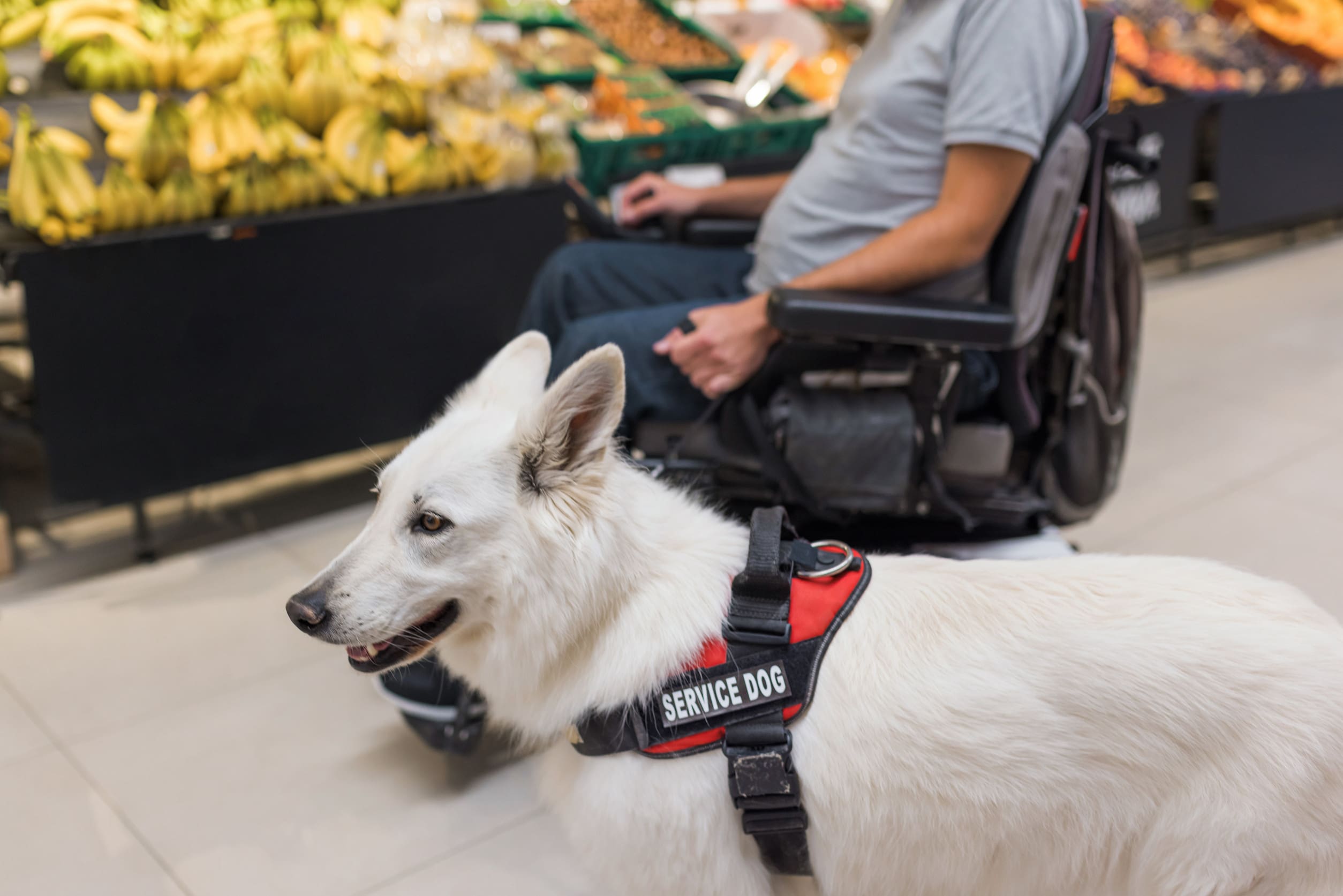
Our Final Thoughts on How to Make Your Pet a Service Animal
At the end of the day, making your pet a service animal is easy. Once you understand the steps to make your pet a service animal, the good news is that the process is simple. Make sure you have a dog that you can train, a disability that qualifies, and a place to register your service animal for the best results.
Now that you know how to make your pet a service animal, the next part of the process is taking action. The good news is that we make the process for registering your service animal a breeze. Plus, you can get everything done online, so you never have to get off the couch.