


People usually want to get a Chihuahua because they’re easy to manage, affectionate, and surprisingly confident for their size. Despite being one of the smallest dog breeds, Chihuahuas have a bold attitude, and they’re very aware of their surroundings at all times. They’re quick to respond whenever something catches their attention.
People with disabilities often wonder if those same traits can make a Chihuahua a service dog. Seniors, especially, often find it easier and more comfortable to care for and manage a small, lightweight dog compared to a larger breed.
Fortunately, it’s possible to train a Chihuahua as a service dog, given that their natural abilities are matched with the right type of service work. In this guide, you’ll learn what a Chihuahua service dog can (and can’t) do, what the law says, and how this tiny breed could realistically meet your needs.
Which Qualities Make Chihuahuas Good Service Dogs?
One of their biggest advantages is their small size. Being compact makes Chihuahuas easy to carry, travel with, and manage in tight spaces like apartments, buses, and airplanes. For people who don’t have much physical strength or live in smaller homes, this portability is a big win.
Another important quality is their alertness. Chihuahuas tend to notice sounds, movements, and changes in routine faster than many larger dogs, which can be valuable for medical or hearing-related assistance.
Chihuahuas also form strong bonds with their handlers. Their loyalty and attachment often mean they stay focused on one person and remain close throughout the day. This close connection can be invaluable for people who rely on consistent emotional support.
However, to succeed as service dogs, Chihuahuas must receive thorough training to stay calm and confident in busy public environments.
Tasks a Chihuahua Service Dog Can Perform Well
While their size limits physically demanding work, Chihuahua service dogs can still perform several important tasks to support their handler’s daily life.
Psychiatric Service Dog Tasks
Chihuahuas form strong bonds with their people. Thanks to their small size, they can sit on the lap and stay physically close throughout the day, which can be very comforting and therapeutic for people dealing with anxiety, panic disorder, PTSD, or other mental health conditions.
These dogs can be trained to notice changes in your behavior or emotional state. When you begin to feel overwhelmed, disconnected, or distressed, a Chihuahua can step in to redirect your focus.
You can trust them to interrupt panic attacks by pawing or licking, stop repetitive or harmful behaviors with a gentle nudge, and alert you to rising anxiety or dissociation as soon as they notice changes in your breathing, posture, or movement.
Chihuahua service dogs can also provide grounding through deep pressure on the chest or lap to reduce the intensity of your emotional episodes.
Hearing Assistance Tasks
Individuals who are deaf or hard of hearing depend on visual cues and heightened awareness to navigate their environment. Chihuahuas make excellent service dogs for these individuals because they pay close attention to sounds and activity nearby.
When a sound goes off nearby, these dogs respond immediately and use learned signals (touching with their nose or paw, nudging their leg, or making eye contact) to let you know something needs attention.
Medical Alerts and Light Assistance
Chihuahua service dogs can also assist with medical needs that don’t require physical strength. Some dogs are trained to recognize physical changes that signal a medical issue and alert you before symptoms worsen. This includes changes in blood sugar, migraine onset, and seizure activity.
Not every dog has this ability, and it can’t be guaranteed. However, when the instinct is there, small dogs can be surprisingly accurate.
Beyond alerts, these dogs can assist with everyday needs by picking up small items that have fallen or bringing medication when needed. These tasks may seem minor, but they can significantly improve your independence and safety if you struggle with frequent symptoms or limited mobility.
Autism Support Tasks
Chihuahua service dogs can make public outings and daily routines feel more manageable for people with autism. You can train these dogs to interrupt repetitive movements, self-harm behaviors, and guide the handler toward an exit or a familiar person. Some are also taught to alert a caregiver if the handler wanders away or becomes separated in public spaces.
During moments of sensory overload, a Chihuahua can provide calming physical contact, such as sitting close or applying light pressure, to help reduce distress and restore focus.
What a Chihuahua Service Dog Can’t Do
While Chihuahuas can assist with specific disabilities, it’s just as important to be realistic about their limitations.
Owing to their small size, these dogs can’t provide balance or stability support, assist someone with standing or walking, or pull a wheelchair. Asking a dog of this size to perform physically demanding work could put both the handler and the dog at risk of injury.
Chihuahuas are also not good guide dogs for individuals who are blind or visually impaired. This role requires a larger dog that can physically lead, block obstacles, and maintain steady movement.
Trying to train a Chihuahua for tasks beyond their physical capacity can be unsafe for the dog and ineffective for the handler.
How Long Does It Take and How Much Does It Cost to Train a Chihuahua Service Dog?
Training a Chihuahua to become a legitimate service dog is a serious commitment of both time and money. Even though these dogs are small, the training process is very similar to that of any other service dog.
In most cases, the training takes anywhere from six months to a year and a half. This timeline includes basic obedience, exposure to public environments, and learning specific behaviors that directly support a person with a disability.
The exact length of time depends on several factors. Some tasks are more complex than others, and certain dogs learn faster than others. A Chihuahua being trained for medical alerts or psychiatric support may progress differently depending on their focus, temperament, and consistency.
The cost of a service dog can vary widely. Working with a professional organization that provides fully trained service dogs can cost between $15,000 and $40,000. These programs usually include breeding, early training, and advanced task work.
If you choose private trainers instead, lessons may range from $100 to $250 or more per hour, and regular sessions over many months can add up quickly. Self-training is usually more affordable, but it still involves the cost of training tools, classes, and occasional professional guidance. Also, it requires a significant time investment.
Is a Chihuahua Service Dog Allowed Everywhere?
Yes, your Chihuahua service dog can accompany you in public places, such as restaurants, stores, hospitals, hotels, and public transportation. The law doesn’t make exceptions based on breed or appearance. This means a Chihuahua has the same legal access rights as a larger service dog when it’s properly trained to assist with a disability.
People are often surprised when they see a small dog being carried or sitting quietly in a bag. Again, the law doesn’t require service dogs to walk beside their handler or look a certain way.
Businesses and public places are allowed to ask only two questions: whether the dog is a service dog required because of a disability and what tasks the dog is trained to perform. They’re not allowed to ask for documentation, registration papers, or proof of training.
According to the U.S. Department of Justice, staff also can’t deny access simply because they believe the dog is too small to be a “real” service dog.
That said, you need to make sure your Chihuahua service dog behaves appropriately in public. They must be under control and house-trained at all times. If the dog is disruptive, aggressive, or not responding to you, a business can legally ask you to remove them from the premises. The goal of public access is to allow the handler to live independently, not to inconvenience others.
Are Chihuahuas a Common Choice for Service Dogs?
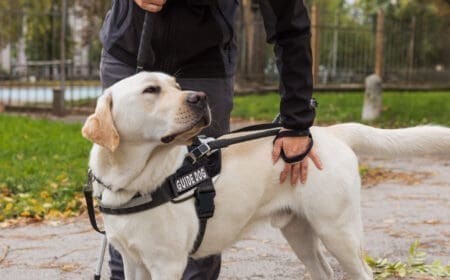
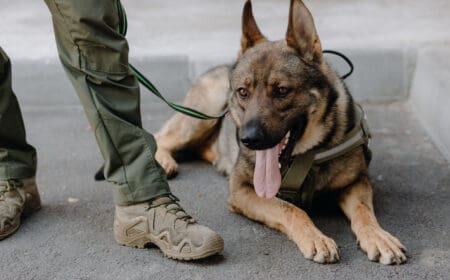
No, Chihuahuas are not a common choice for service dogs. Most service dogs you see in public are larger breeds like Labrador retrievers, golden retrievers, or German shepherds. These breeds are common because they can perform various physical tasks for different disabilities, including mobility support, guiding, and retrieving heavier items.
Chihuahuas, on the other hand, are usually chosen for very specific needs. Since they’re small, they’re not suited for physical assistance, which automatically limits the types of service work they can do. As a result, fewer organizations train them, and fewer people consider them in the first place. However, this doesn’t mean that they lack intelligence or usefulness.
For individuals whose disabilities align with what a Chihuahua can realistically assist with, choosing a smaller dog may actually be an advantage. These dogs are easier to manage, easier to transport, and less physically demanding for some handlers. Plus, if you live in a small apartment or travel frequently, a small dog will fit more easily into your lifestyle.

Life With a Chihuahua Service Dog
A Chihuahua service dog may be right for you if your disability benefits from alert-based or psychiatric support rather than physical assistance. However, you should think ahead before deciding. Disabilities and support needs can change over time. If there’s a chance you’ll need physical assistance in the future, a Chihuahua may not be able to grow with those needs.
If that’s not the case, you’ll love having a small breed as your service dog that’s easier to manage and less disruptive to your routine. Just keep in mind that your Chihuahua would need an exceptionally calm temperament to cope well if your daily environment is very loud, crowded, or unpredictable.